
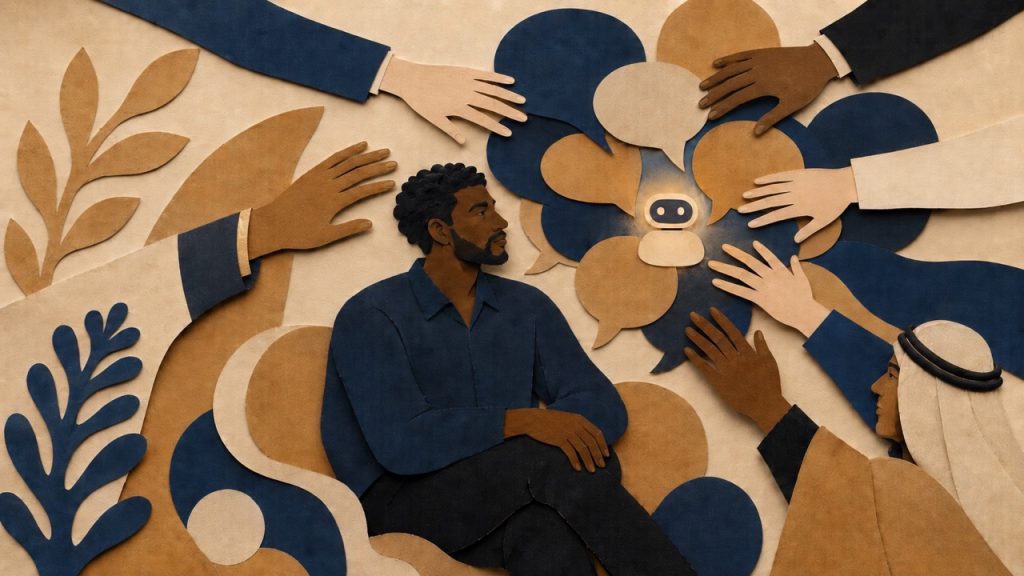

Two product managers, one in London and one in San Francisco, share a Slack channel. At 4pm the London PM tags @Claude to pull last quarter’s churn numbers and draft a summary, then logs off.
Six hours later her colleague wakes, reads the thread, and asks Claude to turn that summary into a board slide. The same Claude serves both of them.
That’s the change in Claude Tag, Anthropic’s new way of tagging Claude in Slack as a shared team member. It’s a multiplayer AI agent with channel memory, tool access, async task execution, and admin-controlled spending. It runs on Claude Opus 4.8 (Claude Fable 5 was paused shortly after launch).
Anthropic is selling institutional memory. That memory compounds with use, billed by token usage, and becomes harder to remove over time. But the work surface belongs to Salesforce, Microsoft has shipped a similar pattern in Teams, and the harder questions now sit around conflicts, outsiders, and observability.
Memory is a compounding asset
Products churn when they cost more than they return, the way one gets fired when their pay exceeds contribution. But consider the janitor who’s worked somewhere for twenty years and knows where all the bodies are buried. That person can keep their job for life, because their value comes from institutional memory, not clean floors.
Anthropic built Claude Tag to hold that kind of memory. As the model follows a channel, it remembers relevant information about the work, so people stop briefing it from scratch; and with permission, it learns from other channels and data sources too.
With ‘ambient behavior’ switched on, it flags things unprompted and follows up on stalled threads. The longer it stays, the more org-specific context it carries, and the more each tag returns. It’s a network effect priced in usage credits.
Tagging Claude is already one of the main ways Anthropic gets work done, and 65% of its product team’s code now reportedly comes from an internal version. Rip Claude out, and the team loses months of tacit knowledge it can’t quickly rebuild.
From handy tool to plumbing
This changes Claude’s position from a useful AI tool to something a team leans on. Once a manager gets used to tagging Claude to pull a metric, work a ticket, open a draft PR in the repo, then post the result in a Slack thread, the next move is to put their team on it and fold it into onboarding for new hires—partly to stop fielding the same question from people repeatedly.
So adoption spreads down and across the org through ordinary work. It also spreads between companies, as a senior who develops the habit carries that expectation to the next employer, who reacts by adopting Claude to keep them. There’s an inter-firm recommendation loop built into the behavior.
Visibility also sells this thing’s value. Everyone in a channel can watch the shared Claude work, pick up better prompts from colleagues, and learn the patterns that produce good output (like creating a draft pull request or calling a specific tool). Teams can build shared prompt libraries that feed the memory bank.
The endgame resembles Google Workspace or Microsoft Office: software you can’t run a modern business without. Anthropic is betting on becoming enterprise plumbing: the infrastructure a company builds around instead of swapping out.
The case for usage billing
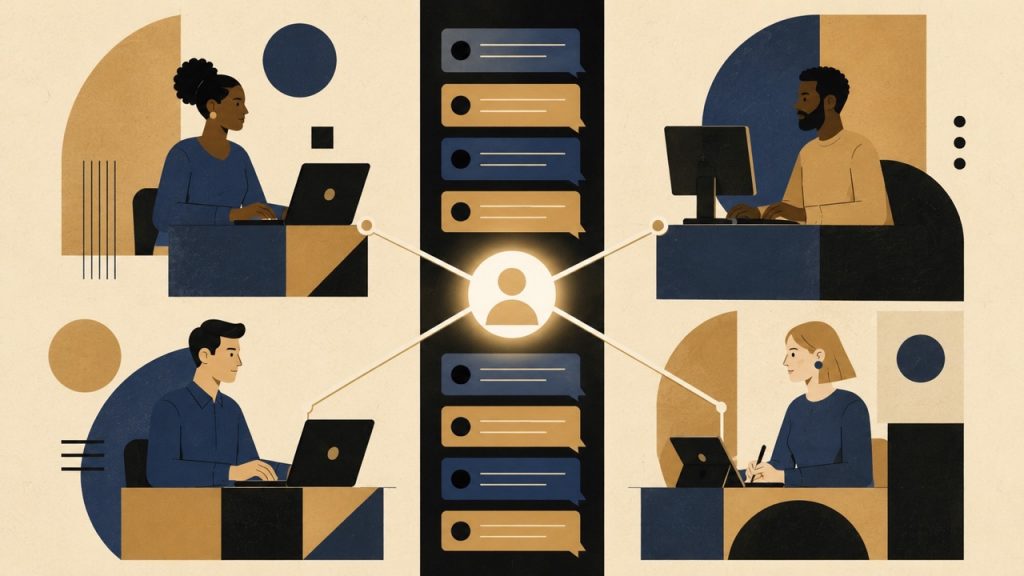
After setup, admins grant the model credentials and access to specific tools, data, and code repos, set spending limits on token usage for the organization and per channel, and read a log of every task and who requested it. Message Claude directly and it replies privately with your personal information and tools.
Usage billing makes the most commercial sense, because revenue can scale with work done, not headcount. One Claude app serves a whole channel.
Enemies in the lobby
This move toward creating a ‘Claude organization’ carries one structural risk: Slack belongs to Salesforce, which bought it for $27.7 billion and runs its own AI agent platform, Agentforce.
Salesforce already lets every employee work Agentforce inside Slack, the surface Claude Tag now occupies. Anthropic is building its flagship team product inside a competitor’s house; a competitor that controls the access, scope, terms, and roadmap.
Microsoft has shipped the same pattern in Teams. Teams Mode turns one-to-one Copilot chats into group chats, and channel agents give every team an AI teammate that learns the channel’s conversations, which mirrors Claude Tag’s multiplayer design point for point.
Microsoft is also further ahead on formal agent identity. Entra Agent ID gives agents governed identities inside Microsoft’s identity stack, while Claude Tag uses scoped Claude identities inside Anthropic’s own product.
And Copilot’s agentic work bills in Copilot usage credits that track model use, context, tool calls, and runtime, a consumption model like Anthropic’s.
Both platform owners reached the lobby first, with distribution Anthropic can’t match. Anthropic’s hedge is to spread @Claude to other work surfaces, so it becomes the agent that works everywhere rather than renting space in a rival’s product.
| Dimension | Claude Tag | Agentforce | Copilot in Teams |
| Work surface | Slack, with more to come | Slack, owned by Salesforce | Teams, owned by Microsoft |
| Shared channel agent | One Claude per channel | Deployed inside Slack | Channel agents and Teams Mode |
| Channel memory | Learns the channel over time | Grounded in CRM and Slack data | Work IQ learns work data and patterns |
| Agent identity | Scoped Claude identities | Salesforce trust layer | Governed Entra identity via Agent 365 |
| Pricing | Token usage with caps | Consumption credits | Copilot Credits by usage |
The questions Claude Tag’s rollout has to settle
Three things remain unresolved. The first is conflicts: when one teammate tags Claude to do X and another immediately tags the opposite, what happens, and how does Claude react?
Updating a Linear ticket is one thing; two async colleagues on different continents giving clashing instructions across a 200-person organization is another. Either individual tags keep precedence, or Claude defers to agreed directives kept in a tool like Asana, Linear, or Notion. Anthropic hasn’t said which.
The second is outsiders: if marketing brings on a contractor, can they tag Claude in the shared channel, and which memories do they reach? Scoping fails the moment a contractor can see the output of everyone else’s prompts. Lock outsiders out, and internal collaboration improves while vendor and freelancer work drops back to manual back-and-forth.
Third, observability: private chats let people prompt freely. When the whole channel watches every tag, some will hold back—the price of making work visible.
Anthropic frames this as an evolution of Claude Code. The same task execution that drives a Claude Code session now gets shared across a channel and split into separate Claude identities, each with a different scope and context. The direction points to many Claudes running in parallel across every work surface a company uses.
Whether Claude Tag becomes plumbing or remains a Slack feature will come down to how Anthropic settles conflicts, outsiders, and the platform owners already holding the lobby.
Want your team to get more from Claude?
I run practical Claude training for teams that want to use AI across research, writing, analysis, workflows, and day-to-day work.
The sessions cover how to brief Claude properly, use projects and memory, review outputs, build repeatable workflows, and make Claude useful for your team.