
For event managers, panel moderators, and media producers, “help our leaders understand AI” can mean different talks:
- one covering agentic AI
- another explaining deepfakes
- a third walking through machine learning
- a fourth on sovereign AI
- and another on regulation
This guide sorts UK AI speakers by topic for easier selection.
| Topic | Speaker | Best for |
| Agentic AI, workflows, commerce | Mo Shehu, PhD | Audiences past the basics who need autonomous workflows, agent governance, and machine-readable systems (including agentic commerce) |
| Enterprise AI adoption | Anthony Baafi, Andrew Grill | Operating models, training, risk, and executive framing |
| AI, STEM, future of work | Dr Anne-Marie Imafidon | AI literacy, inclusion, future skills, and the workforce |
| Generative AI, synthetic media | Henry Ajder, Nina Schick | Deepfakes, fraud, voice cloning, trust, and geopolitics |
| AI governance, policy, research | Dame Wendy Hall | Government, national strategy, web science, and public institutions |
| AI, copyright, creative industries | Ed Newton-Rex | Licensing, training data, and rights holders |
Agentic AI, AI workflows and agentic commerce
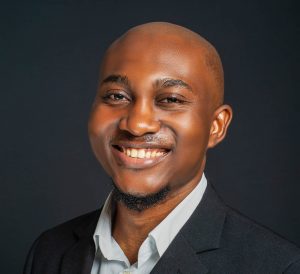
Mo Shehu, PhD
Mo Shehu is a UK-based AI speaker and practitioner focused on agentic AI, workflows, and agentic commerce. He has lived and worked across seven countries and worked with AB InBev, P&G, Standard Bank, First National Bank, EssenceMediacom, PostHog, Y&R, PelicanCorp, and Woolworths.
His background spans technology, research, and commercial strategy. A PhD-trained researcher, his first of three TEDx talks presented a framework on digital maturity, and he has appeared across media and podcasts to discuss technology, AI, business, and digital culture.
His recent work includes industry analysis on agentic commerce, open source agentic AI products like Agent Kit, and published research into AI policy in Africa and agentic AI in journalism.
He fits audiences that need agentic workflows, AI commerce systems, organisational controls, and machine-readable systems explained through practical research and build experience.
Useful links: Speaking page • LinkedIn • Agentic AI frameworks • Agentic commerce benchmarks • Agent Kit • Published AI research
AI, STEM and the future of work
Dr Anne-Marie Imafidon
Dr Anne-Marie Imafidon is a digital Transformation speaker for AI & IT and was awarded an MBE in 2017 for services to STEM. She co-founded Stemettes, serves as trustee chair of the Institute for the Future of Work, and wrote She’s In CTRL, a book about women, technology, and power.
Her profile fits audiences focused on AI literacy, STEM, inclusion, future skills, and the workforce. She also speaks to organisations that want to connect technology change with talent, access, and leadership.
Useful links: Speaker page • Book • Institute for the Future of Work
Enterprise AI adoption and transformation
Andrew Grill
Andrew Grill is a UK-based futurist and AI speaker working on digital transformation, executive education, and AI strategy. His profile includes the book Digitally Curious, a long run as a technology commentator, and a former role as Global Managing Partner at IBM.
He fits audiences that want broad executive framing: what AI means for leadership, productivity, customers, and markets.
Useful links: LinkedIn • Book • Podcast
Generative AI and synthetic media
Henry Ajder
Henry Ajder works on generative AI, deepfakes, synthetic media, trust, identity, and authenticity. He was lead author of the 2019 State of Deepfakes report, which mapped the early deepfake field, and his profile lists advisory work across major AI, media, and policy organisations.
He fits audiences that need to understand AI-generated media, fraud, reputation risk, voice cloning, provenance, and digital trust.
Useful links: Website • LinkedIn • State of Deepfakes report
Aarti Samani
Aarti Samani is a cybersecurity expert that works on AI risk, deepfake fraud, social engineering, and organisational resilience. Her work focuses on how generative AI changes executive impersonation, finance controls, hiring, HR checks, and trust inside companies.
Her background includes senior product and marketing roles in AI-adjacent companies, including SwiftKey, Digital Surgery, iProov, and Microsoft. She now helps organisations understand and reduce deepfake-enabled fraud.
She fits audiences that need practical examples of AI-generated fraud, identity attacks, synthetic media, and social engineering risk.
Useful links: Website • LinkedIn • Video podcast • Media kit
Walter Pasquarelli
Walter Pasquarelli works on AI strategy, generative AI, synthetic reality, data governance, and AI policy. He’s an affiliated researcher at the Bennett School of Public Policy at the University of Cambridge and has worked on AI advisory and editorial programmes at The Economist Group.
He fits audiences that need a broader view of AI adoption, regulation, and the social effects of generative technologies.
Useful links: Website • LinkedIn • Cambridge profile • OECD AI review of Germany
AI governance, policy and research
Dame Wendy Hall
Dame Wendy Hall is Regius Professor of Computer Science at the University of Southampton and co-author of the UK government’s 2017 AI Review. Her profile also includes work with the UN advisory body on AI and the Web Science Institute.
She fits research, policy, government, and governance audiences that need depth on AI systems, web science, national strategy, data, and public institutions.
Useful links: University profile • LinkedIn • AI Review
AI, copyright and creative industries
Ed Newton-Rex
Ed Newton-Rex is a composer and scholar who speaks on AI, copyright, training data, licensing, and the creative industries. He founded Fairly Trained, which certifies generative AI companies on their training-data practices, after resigning from Stability AI over copyright concerns.
He fits media, music, publishing, legal, and creative-industry events where AI and rights are central.
Useful links: Website • LinkedIn • Fairly Trained • Resignation note (op-ed)
How to choose an expert AI speaker in the UK
Start with the decision your audience needs to make after the talk.
If leaders need to understand AI agents, workflows, agentic commerce, and machine-readable systems, look for published work and practitioners in that category.
If the session covers adoption, culture, training, and change management, an enterprise AI transformation speaker fits better.
If the risk concerns deepfakes, fraud, synthetic media, or public trust, bring in a specialist on generative AI and media integrity.
If the event covers policy, research, or national strategy, academic and governance voices may give deeper grounding.
And if copyright, licensing, and creative work are central, choose a speaker who focuses on AI’s effect on creators, media firms, and rights holders.
Match the speaker’s published work to the conversation your audience needs to have.