


TLDR: Pick a path based on your headcount, timeline, and whether you have a strategy problem or capability problem.
Nearly two-thirds of UK organisations now use AI—up from 52% just a year ago—yet 49% of those same organisations name AI and digital skills shortages as their biggest adoption challenge.
So they’re adopting, but they don’t have the people to do it well.
Boards are now considering the classic build or buy question:
Should we hire an AI Adoption Specialist at £50k–£70k per year, or book structured team training at £1,500–£3,000 across six weeks?
Both have pros and cons. Here’s a framework to help you pick.
The problem both options are trying to solve
Lack of expertise is the top barrier to AI adoption for UK businesses, cited by 35% of IT decision-makers, ahead of high costs at 30% and uncertainty around ROI at 25%.
The instinct is to solve an expertise problem by hiring expertise. But the logic is not as clear-cut as it seems.
An AI Adoption Specialist focuses on strategy, tooling decisions, vendor relationships, change management, and internal evangelism.
Team training closes the daily capability gap across existing staff by teaching prompting, workflow integration, and output evaluation.
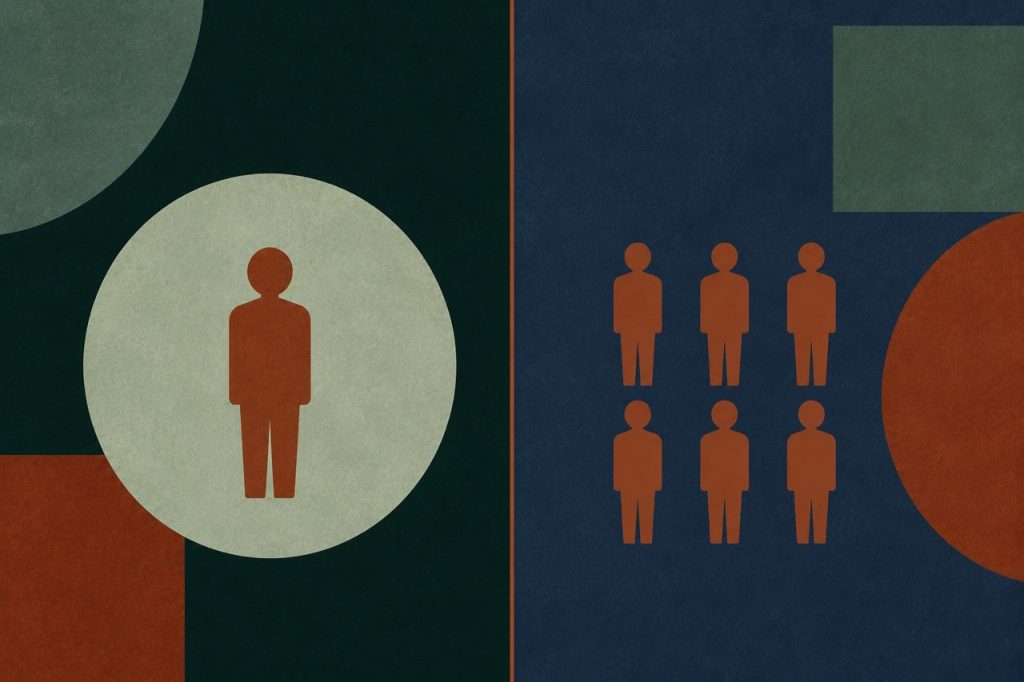
One buys a strategist; the other builds a capable workforce.
What hiring an AI specialist actually costs
Digital Adoption Specialists in the UK earn between £47,000 and £72,000 per year, with senior and London-weighted roles pushing higher.
A recent AI Adoption Specialist role in London advertised a salary of up to £65,000 on a 12-month fixed-term contract.
Add employer National Insurance, pension contributions, onboarding costs, and the standard three-to-six month ramp before they produce anything useful, and year one can run £80,000–£100,000 or more.
What you get for that investment is one person, one skillset, and one seat. They can build the roadmap, own vendor conversations, and drive change management from the inside.
That’s useful and valuable—in the right context.
What you don’t always get is distributed capability. AI specialists command salaries that mean you might hire two or three at most, while the rest of the organisation continues operating in pre-AI workflows, leaving a centre of excellence sitting in one corner while everyone else carries on as before.
What AI team training actually costs
A structured AI enablement programme for a team of six to ten people runs £1,500–£3,000 across six weeks. No pension, employer NI, notice period, or recruitment timeline required.
Six to ten people leave with shared language, shared workflows, and peer accountability built in from day one.
But they might not leave with someone to own the AI strategy full-time, manage integrations, or navigate procurement decisions at scale.
When to hire an AI Enablement or Adoption specialist
Hiring specialist AI talent remains the right call for highly technical roles that need immediate filling. The specialist hire makes strong sense under the conditions below.
| Signal | Why it points to hiring |
| You’re integrating AI into core product or infrastructure | Needs technical depth, not just literacy |
| You have 50+ employees across multiple functions | Change management at scale needs a dedicated owner |
| You’re navigating vendor contracts or custom model deployment | Procurement and governance are full-time problems |
| You have a multi-year AI roadmap already signed off | Someone needs to execute it, not just understand it |
| You’ve already trained the team and need the next level | Training has done its job; now you need an architect |
The specialist hire is also the right call when speed matters. Bootcamps take weeks to move the whole team; a strong hire can start applying leverage within 30–60 days in a receptive environment.
If you have a complex technical problem with a near-term deadline, you can’t train your way out of it fast enough.
When to train your team
Organisations with formal AI training programmes achieve faster AI adoption and higher AI ROI compared to those without. Training wins under the conditions below.
| Signal | Why it points to training |
| Your team uses AI ad hoc but inconsistently | Shared capability closes the consistency gap faster than a hire |
| You have under 30 employees | A specialist hire might be a disproportionate commitment at this scale |
| Your budget is under £60k | Training is the only viable option |
| You need fast, visible wins | Six weeks beats six months of onboarding |
| Your team has the tools but low adoption rates | This is a behaviour problem, not a strategy problem |
87% of AI-using UK businesses describe their adoption as only partial, with just 1% saying AI is fully embedded across the organisation. That’s overwhelmingly a training and behaviour gap, not a strategy gap.
A specialist can’t fix it alone, and expecting one to try is setting both the hire and the business up to underdeliver.
The retention risk
There’s a complication on both sides of this decision. Employees who receive intensive AI training are 59% more likely to leave for better-compensated roles elsewhere.
Train people well and the market comes for them. Hire a specialist on a competitive salary and they’re still circling the market 18 months in.
Neither is a reason to avoid the investment, but both are reasons to treat each option as infrastructure—building capability into your organisation’s systems, culture, and processes, not into one person’s job description or one cohort’s memory.
AI adoption must be an ongoing investment, not a one-time thing.
A third option
Some organisations are getting the best of both by training first and hiring second.
Six weeks of team training clarifies where the real gaps are. You discover which problems need distributed capability and which need dedicated ownership.
Then, if a specialist hire makes sense, you’re bringing someone into an organisation that already speaks the language—which shortens ramp time and gives the specialist something to actually work with.
Businesses that rely too heavily on external hires without upskilling their existing teams risk creating internal knowledge silos that prevent adoption at scale.
Training first makes the eventual hire smarter and more effective.
How to decide
Three questions cut through most of the noise.
First, is this a strategy problem or a capability problem?
If your team doesn’t know how to use the tools you already have, that’s capability—train. If you don’t know which tools to use, how to integrate them, or what your AI roadmap looks like, that’s strategy—consider hiring.
Second, what’s your headcount?
Under 30 people, training almost always wins on unit economics. Over 50 people with multiple functions, a specialist starts to justify the investment.
Third, what’s your timeline?
Need something working this quarter? Training delivers faster. Building for a two-year horizon? A specialist hire makes the longer commitment worthwhile.
Where to go from here
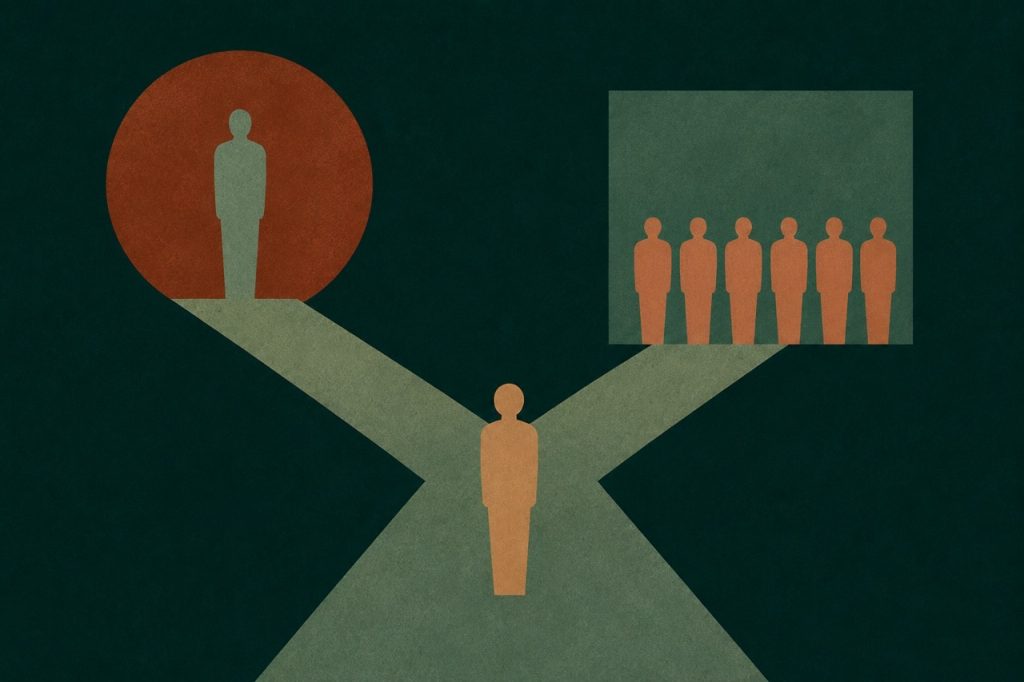
The £50k–£70k hire and the £1,500–£3,000 training programme solve different problems.
One builds strategic capacity. The other builds distributed capability. Most UK businesses need both eventually—the question is which one they need first.
Get the sequencing right and both investments compound on each other.
- Not sure where you sit? Take the two-minute quiz and get a clear recommendation based on your team size, budget, and timeline.
- Want to talk it through? Book a free audit and we’ll map your current AI capability against where you need to be.
- Ready to get your team started? Browse training programmes and find the right fit for your team.