
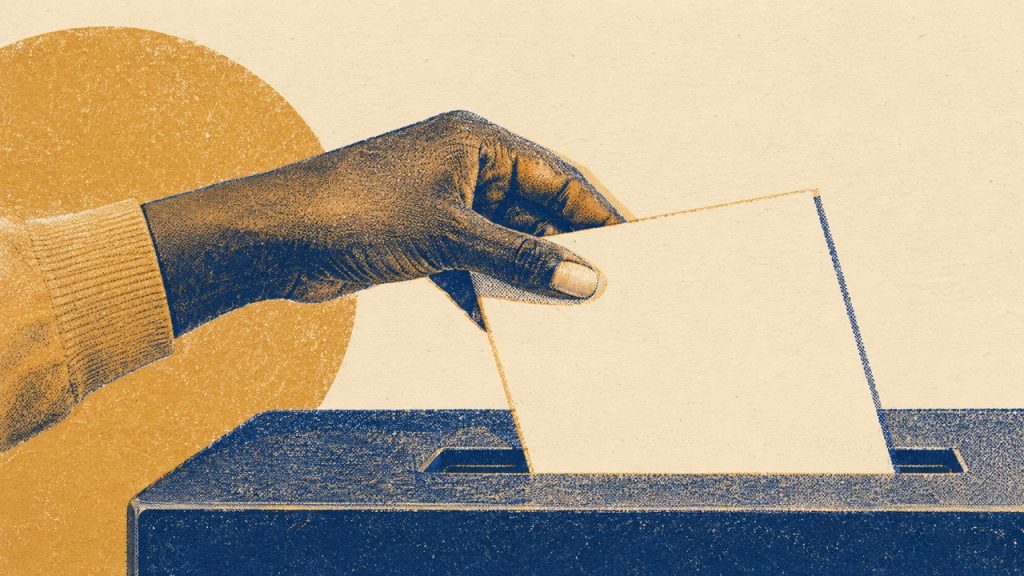

“I submitted an application I was strongly confident I qualified for, and not even two minutes after I hit submit, I got the famous rejection email.”
A warehouse operations leader posted that under a recruiter’s announcement that his firm had taken a hard stance against AI in its hiring process.
Over 300 comments followed. People described two-minute rejections, chatbot interviews that cut them off mid-sentence, and the suspicion that no human had read their resume.
It speaks to a new era of automated candidate screening using AI software, set against a cooling job market, rampant layoffs, and intense competition between potential candidates.
AI candidate screening uses software to read resumes, score applicants against a role, and rank them, often within seconds.
Around 90% of US employers now run job seekers through one AI screening tool or another. Vendors sell speed, but candidates report opacity in the recruitment process.
Between those two accounts lies a body of research, and three findings stand out.
First, the bias the technology promises to remove can survive inside it.
The largest study so far examined 4 million applications from 3.4 million people across more than 150 employers—each one screened by a single vendor’s AI recruitment tool. The authors found clear racial disparities in those who advanced.
Second, the structure of the software market amplifies the problem.
When most employers buy from the same few AI recruitment software vendors, a rejected candidate may not get a fully independent assessment at the next company using the same or similar vendor logic.
Third, regulation has moved slower than the technology. Two of the most watched regimes, New York City and the European Union, have both found that writing the law around AI candidate screening tools is easier than enforcing it.
How AI resume screening works
There are three broad ways AI screens a potential candidate today.
The first reads text. An applicant tracking system or resume-screening tool parses a CV, pulls out skills and dates, and scores the candidate profile against the posting.
The second runs the conversation. An AI interviewer asks questions by chat or video and rates the interview responses.
The third tests directly, through skill tasks that feed predictive analytics about fit.
| Screening type | What it does | What it scores |
| Resume and ATS parsing | Reads CVs and applications, pulls out skills and history | Match to the job description |
| AI interviews | Asks set questions by chat or video | Interview responses, sometimes tone or expression |
| Skills assessments | Sets tasks or game-based exercises | Performance signals feeding predictive analytics |
Older keyword-matching systems rejected anyone whose resume missed the right phrases. Newer AI algorithms read “managed a team of twelve” as the equivalent of “led a department.”
There’s a genuine improvement there, and it explains the core of the vendor case for automated candidate screening: one role can draw thousands of applications, and no human recruiter reads every one with equal care.
Firms also market AI resume screening as a cure for unconscious bias and slow recruitment processes.
Investigative reporter Hilke Schellmann, who spent years testing these systems, told NPR that many companies “close the application after 24 hours because they already got hundreds and thousands of resumes.”
These AI recruiting tools now touch the whole pipeline, from candidate sourcing and matching to final assessment.
“Using AI to help with candidate filtering and screening isn’t a bad thing. Using it to do all the screening and filtering is. Instead of saying 100% no, how about we encourage better AI practices?” — Direct-hire recruiter.
What candidates and recruiters report
Under that recruiter’s post, the comments split along familiar lines. Job seekers described the candidate experience and reported rejections that arrived only minutes after they applied.
“I was interviewed by an AI image that kept moving and smiling. I wanted to clarify one of my answers. The bot turned me off, saying I took too long to answer the question, and I failed the interview.” — Medical-devices consultant.
“I feel I have been screened out of several positions without a human eye ever reviewing my credentials. I support using AI provided we use it as a tool, not a crutch.” — Executive job seeker.
Recruiters in the thread drew a finer line. Several located the problem in placement: use AI to sort and normalize messy applications, but leave the hiring decision to a person.
“The risk in candidate screening is rarely the technology itself, but rather the failure to separate an automated ingestion layer from the core decision engine of human judgment.” — Product leader.
“The defensible version of AI in screening augments judgment with verified inputs like work samples and structured assessments. It isn’t one that ranks LinkedIn profiles and calls it shortlisting.” — Search-firm founder.
Of course, there’s a limit to what self-reported candidate responses can tell us. Such posts celebrate a no-AI stance, so they draw people who already agree.
Anyone content with AI candidate screening has little reason to comment, and job seekers in particular have no reason to perform agreement in a public feed hiring managers can read.
For documented cases, the record predates the current wave. In 2018, Reuters reported that Amazon had scrapped an internal recruiting tool after finding it downgraded resumes that included the word “women’s.”
In 2023, the US Equal Employment Opportunity Commission warned that resume scanners and video tools can screen out qualified candidates.
It gave the example of an applicant with a speech impediment scored low by a system reading speech patterns.
Bias in candidate assessment
The strongest evidence on bias comes from outside the vendor market. In a paper for the ACM Conference on Fairness, Accountability, and Transparency, researchers from Stanford, Chapman University, and Northeastern analysed 4 million applications from 3.4 million applicants to 156 employers across 11 sectors, most of them companies above $5 billion in revenue.
Every application ran through algorithms from one vendor, the talent platform Pymetrics, now owned by Harver.
There were clear disparities when measured against the four-fifths rule, the US standard that flags a group selected at under 80% of the top group’s rate.
Position by position, 10.62% of jobs showed adverse impact on Black applicants. Overall, 25.87% of applications from Black job seekers went to roles where the outcome could trigger federal discrimination scrutiny. In comparison, 14.74% of Asian applicants were adversely impacted.
The authors named the underlying condition ‘algorithmic monoculture’, the state in which many decision-makers rely on the same or similar algorithms.
The researchers admitted no causal claim in the paper, only correlation at scale. They also noted how rare their access was: Pymetrics shared data that, by their account, no other independent team has been given, since most vendors keep it locked away.

Bias, rules, and distance to enforcement
Two governments have tried to regulate AI in candidate screening. Their experience shows what oversight and enforcement looks like in practice.
New York City‘s Local Law 144 has applied since 2023. It requires any employer using an automated employment decision tool on a city resident to commission an annual independent bias audit, post the results, and tell candidates in advance. Penalties run from $500 to $1,500 per violation, per day.
In December 2025, the New York State Comptroller audited how the city had policed the law over its first two years.
The enforcement agency had received two complaints in that window. It had surveyed 32 companies and found a single case of non-compliance.
The Comptroller’s own auditors, reviewing the same companies, identified at least 17. The audit also found that complaints to the city’s 311 line weren’t reliably routed to the agency meant to act on them.
The European Union‘s approach is broader. The AI Act classifies systems that screen, rank, or score job applicants as “high-risk”, which brings duties for risk assessment, bias testing, logging, human oversight, and disclosure to candidates.
Non-compliance can bring fines up to €15 million or 3% of global turnover. But the deadline for these employment systems has moved from August 2026 to December 2027, through a simplification package the Commission proposed in November 2025.
| New York City (Local Law 144) | European Union (AI Act) | |
| In force | Since 2023 | Phasing in; employment duties from December 2027 |
| Scope | Automated tools used on NYC residents | Systems that screen, rank, or score applicants (“high-risk”) |
| Core duty | Annual independent bias audit, posted publicly, plus candidate notice | Risk assessment, bias testing, human oversight, logging, disclosure |
| Maximum penalty | $500 to $1,500 per violation, per day | €15 million or 3% of global turnover |
| Enforcement to date | Comptroller found weak complaint routing and under-detection | Deadline moved; technical standards not yet final |
“The irony is most people aren’t worried about AI replacing humans. They’re worried about humans hiding behind AI.” — Revenue consultant.
How to use AI in candidate screening to land a qualified candidate
You can land a suitable candidate through an AI recruiting tool, but it takes seeing the software as part of the recruitment process, not a substitute for it.
Here are five ways to make the right hiring decision while improving the candidate experience.
Treat AI as a sorting aid, not a judge
The strongest case, from the research and working recruiters, puts automation on the early, mechanical work: parsing applications, pulling out skills, and surfacing people a keyword filter would miss.
Reserve the screen-out and advance decision for a human. A model that ranks profiles and auto-rejects the bottom strips out human review at the one point where it counts.
Audit the AI recruiting tool on your own hiring data before trusting it, then keep auditing
Run the four-fifths test by demographic group, compare selection rates, and treat any group picked at under 80% of the top group’s rate as a signal to investigate.
Check false negatives too (the qualified people filtered out by the system), since they never reach you and never show up in headline accuracy numbers.
Treat a vendor’s own audit as a starting point rather than proof, for three reasons: they’re naturally biased, their method may vary, and a clean summary can still hide adverse impact.
Diversify your signals so you don’t inherit one vendor’s blind spots
When many employers run the same algorithm, the same candidates get rejected everywhere they apply.
Combine sources to soften that: structured interviews, work samples, and skills tasks alongside any resume score.
Verified evidence of what someone can do carries more weight than a profile match, and it gives strong candidates with non-linear histories a way through.
Tell candidates what you’re using, and give them a route to a human
Disclosure is already law in New York City and is arriving under the EU AI Act. It also protects your brand: a first encounter with a bot that cuts people off becomes a first impression of the company.
Offer a named contact, clear timeline, and an alternative for anyone who asks. Separately, let applicants choose when and whether their data gets stored beyond the hiring process.
Keep a person accountable for every decision the system informs
Log what the tool recommended and what the human chose, so you can review patterns later and answer a candidate or a regulator.
Used this way, an AI candidate screening tool widens your reach and cuts admin with little downside, while strengthening candidate engagement.
Get your HR team ready to use AI well
Most HR teams inherit an AI screening tool from procurement and learn it on the job.
A short, focused session for your team covers how to audit a vendor’s bias claims, where to draw the line between automated sorting and human decision-making, and what disclosure rules now expect from you.