
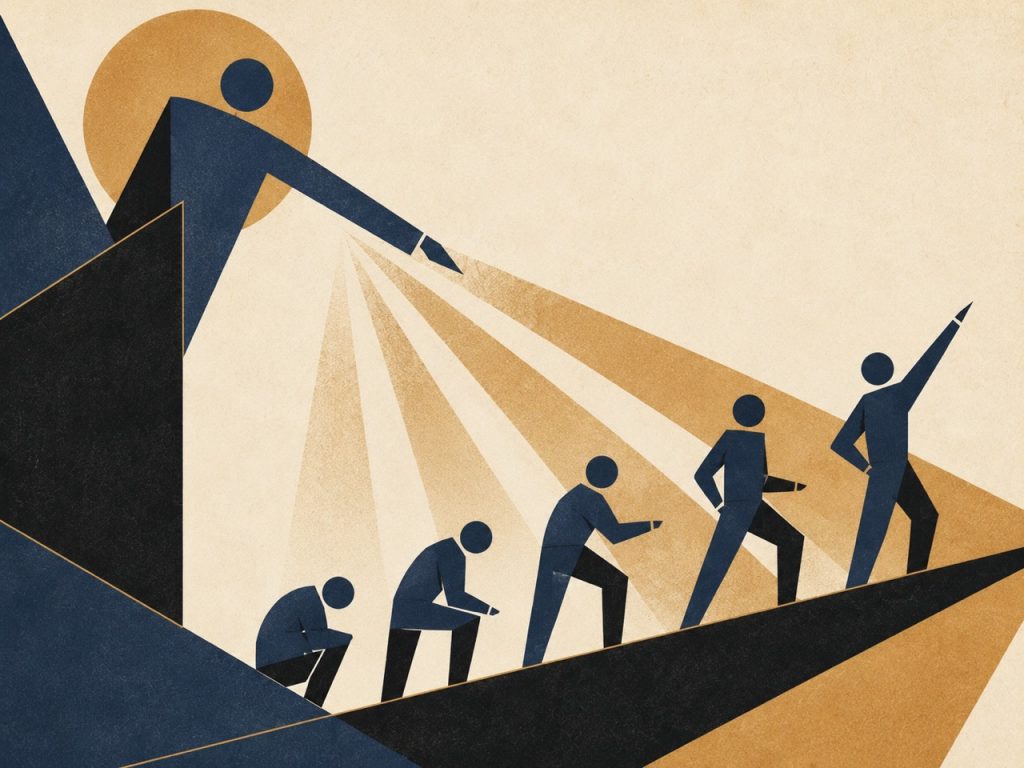

In 2019, fresh off my doctorate (and with a mouth full of braces), I gave a TEDx talk on digital maturity with my friend and digital strategy consultant Vivette Rittmann.
We argued that most organizations were confusing digital tool deployment with genuine digital transformation, ignoring the human dimensions of literacy, identity, rights, safety, and culture that actually determine whether technology sticks.
We used the example of Frans, a young man who studied accounting, landed a new job, and decided he needed to fly to a neighboring country to upgrade his certifications, because nobody had told him he could do all of it from his desktop.
The tool was always there, but the ability to use it wasn’t.
Today, AI is transforming organizations around the world, and we’re seeing many of the same mistakes play out again.
A 2025 MIT NANDA report found that 95% of enterprise generative AI pilots fail to deliver measurable business impact. Between 70% and 85% of AI initiatives fail to meet their expected outcomes overall.
And a RAND Corporation study found that more than 80 percent of AI projects fail, with the most common root cause being organizational leadership misunderstanding how to set the project up for success.
The technology has never been the problem. It’s always been the people.
What we got right in 2019
Vivette and I built our talk around a digital maturity framework that covered eight human dimensions:
- Digital rights
- Digital literacy
- Digital communication
- Digital emotional intelligence
- Digital security
- Digital safety
- Digital use
- Digital identity
We argued that digital literacy, the basic ability to use devices and navigate the internet, was the floor, not the ceiling. Real digital maturity covered far more ground.
We also pointed to a PwC study showing that 75% of digital transformations failed when companies didn’t account for their people.
We cited Walmart as a counter-example: a company that competed with Amazon not just on technology, but on digital culture, paired teams across skill levels, and built digital competency into their leadership positions.
None of that has dated. The framework translates almost perfectly into the AI context, which isn’t a coincidence. AI is a new layer on the same underlying challenge, and organizations that never resolved the digital maturity problem are now doubly exposed.
“78% of organizations now use AI in at least one business function, yet only 7% describe their AI deployments as mature and scaled.” — McKinsey, 2025

The eight digital maturity dimensions, updated for AI
AI added a new surface area to every one of the original dimensions of our talk.
| Dimension | Original meaning | AI-era equivalent |
| Digital rights | Data privacy; your data as a product | AI input data usage; model training on sensitive inputs; informed consent |
| Digital literacy | Critical thinking; content creation and evaluation | Prompt quality; output evaluation; AI source skepticism |
| Digital communication | Tools for collaboration across distance | AI-mediated communication: drafted emails, synthetic meeting summaries, AI-generated responses |
| Digital emotional intelligence | Awareness of the human behind every screen | Recognizing where AI removes human judgment from high-stakes decisions |
| Digital security | Password hygiene; antivirus; device protection | Prompt injection; data leakage via unsanctioned tools; AI-specific governance gaps |
| Digital safety | Social engineering; vetting online sources | Deepfakes; AI-generated phishing; synthetic media and impersonation |
| Digital use | Screen time; digital health; knowing when to step away | AI dependency; cognitive offloading; knowing when not to use AI |
| Digital identity | Gig economy; managing your online presence | Authorship in an AI-assisted world; professional credibility and attribution |
An organization that never built genuine digital literacy in its people doesn’t suddenly get AI-ready because it buys a Copilot licence. A team that never developed critical thinking around online content won’t evaluate AI outputs any better. The new tools inherit all the old gaps.
From digital literacy to AI literacy
Vivette’s sister Marijke is a great example of what high-function digital literacy looks like in practice.
When she needed a car alarm, she didn’t go to a shop. Instead, she found the make and model of her car online, located a specialist owner’s forum, identified the right self-installing alarm, found a YouTube tutorial, and fitted it herself.
That’s media literacy, critical information analysis, and practical application stacked together.
The AI-era equivalent isn’t using ChatGPT. It’s the ability to:
- identify which tasks AI handles well versus poorly, and make that call quickly
- recognize unreliable or fabricated outputs without defaulting to blind trust or reflexive rejection
- understand the conceptual differences between tool types (generative AI, retrieval-augmented generation, agentic AI) without needing to be an engineer
- ask better questions of AI tools, and act on the responses with appropriate, informed judgment
Most organizations conflate AI literacy with AI access. A licence isn’t capability. Frans had a PC the whole time.
The skills gap data reflects this: per IDC, in 2024, 94% of enterprise leaders identified AI as their top in-demand skill for 2025, yet only about a third feel they’ve prepared their employees effectively.
From the same report, 40% of IT leaders reported fragmented skills development, nearly one-third of respondents noted difficulties in scaling training across different functions, and almost half (49%) cited a lack of organizational support for effective skilling programs.
DataCamp ran a similar study in 2026 and found that 59% of enterprise leaders report an active AI skills gap in their organizations in 2026. Meanwhile, a separate report found that 42% of employees say their employer expects them to learn AI on their own, with no structured support in place.
“Only a third of employees report receiving any AI training in the past year, even as half of employers report difficulty filling AI-related positions.” — IDC / Workera, 2025
That’s the Frans problem, scaled to entire workforces.
The common failure modes with AI literacy and maturity
Vivette and I could have written a 2025 keynote using exactly the same structure, because the failure modes are structurally identical. Here’s how they look in an AI context.
Tool-first thinking
Buy the platform, figure out the use case later. This leads to shelfware, resentment, and eventual abandonment. Meanwhile, McKinsey’s 2025 research found that high performers are nearly three times more likely to say their organizations have fundamentally redesigned individual workflows.
One-time training
A single lunch-and-learn, a shared link, a 45-minute webinar, done. But AI changes fast. A one-off intervention doesn’t build durable capability, and any confidence it generates tends to evaporate within weeks.
No governance
Employees use AI tools ad hoc, often inputting sensitive client data or internal information into unsanctioned platforms with no oversight, no policy, and no visibility.
Businesses today express concern about AI hallucinations, and yet governance frameworks remain rare outside large enterprises.
Leadership exemption
Senior leaders treat AI as something for junior teams to implement, rather than a capability they need to model, govern, and understand themselves.
The problem starts at the top. Projects with sustained leadership involvement achieve higher success rates versus those that lose executive sponsorship.
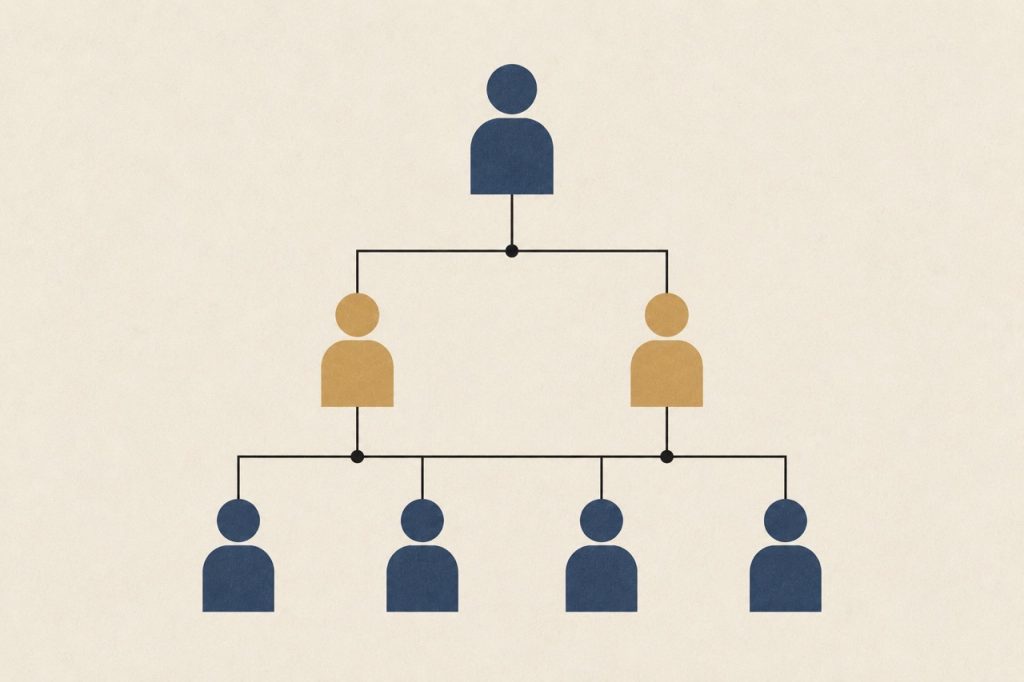
AI enablement: the assess-analyze-align model
The practical framework Vivette and I described in 2019 maps onto AI adoption today. We called it assess, analyze, align.
Assess means understanding your current state before adding more tools. Where do people already use AI, officially or unofficially? What are their fears? What do they still do manually that AI could meaningfully improve? This requires an honest audit, not an assumption that digitally confident employees are AI-ready.
Analyze means asking whether your current technology matches your team’s actual capability. A mismatch in either direction is expensive. Too advanced, and adoption fails. Too limited, and you’re leaving capability on the table. Per BCG, the organizations that generate tangible AI value invest 70% of their AI resources in people and processes, not just technology.
Align means building toward shared business goals, not a technology target. Pair a more AI-fluent employee with a less experienced colleague on the same process. The Walmart principle would be to make AI literacy a cultural expectation embedded in leadership, not a personal side project buried in individual development plans.
“Business transformation remains elusive not because of a lack of tools, but because employees lack the confidence, insight, or ethical awareness to deploy them effectively.” — Holmström, 2022
What AI maturity actually looks like today
The markers of digital maturity that Vivette and I described in 2019 have direct AI-era equivalents.
| Traditional digital maturity marker | AI maturity equivalent |
| Paperless, digitized processes | AI-integrated workflows with deliberate human review at high-stakes points |
| Strong user experience | AI tools adapted to user behavior and organizational context, not just dropped in |
| Data-driven decision-making | AI-assisted analysis with human judgment reserved for consequential calls |
| Digitally competent leadership | Leaders who understand AI well enough to set policy and model behavior |
| Digital culture | Psychological safety to experiment with AI, report failures openly, and iterate |
Mature organizations treat AI as an organizational capability, not a technology project.
They set clear success metrics before approving any AI investment. They assess data readiness before committing budget. And they expect a realistic timeline for ROI, typically two to four years, rather than chasing immediate returns on experimental pilots.
Where to start with AI maturity and literacy
Three practical entry points, in order of urgency:
First, audit your current AI use before adding more tools. You’ll find more unofficial adoption than you expect. That’s useful intelligence, not a compliance problem.
Second, build a basic AI usage policy before the first data incident, not after. It doesn’t need to be long. It needs to exist.
Third, run a skills assessment against the eight AI literacy dimensions above. Identify the biggest gaps, then build training around those specifically. A generic AI overview covers nobody in particular and builds capability in nobody at all.
The skills shortage from unaddressed AI literacy is an enormous, measurable risk. IDC estimates it could cost the global economy up to $5.5 trillion by 2026 in product delays, missed revenue, and lost competitiveness. That’s a future problem already underway.
If you’d like a structured AI maturity audit or a bespoke training programme for your team, get in touch.